Routines for Distractible Kids and Kids with ADHD: 5 Things You Can Do at Home
Korea's National Center for Mental Health and the US Centers for Disease Control and Prevention (CDC) recommend a daily schedule in the same order, a checklist of tasks, one instruction at a time, immediate praise for good behavior, and a calm, simple environment at home. These are general at-home methods, and the diagnosis and treatment of ADHD must always be discussed with a specialist.
Please note first: this is not diagnosis or treatment information
This article summarizes general at-home daily management methods recommended by official organizations. Being distractible does not mean a child has ADHD, and only a child and adolescent psychiatrist can decide on an ADHD diagnosis and treatment. If you're worried, talk to a specialist first.
For children under 6, the US Centers for Disease Control and Prevention (CDC) recommends behavior therapy with parents involved (parent training) first, and advises talking it over with your child's doctor. Korea's National Mental Health Information Portal (National Center for Mental Health) also describes ways to adjust the home environment and manage behavior.
5 routines you can do at home
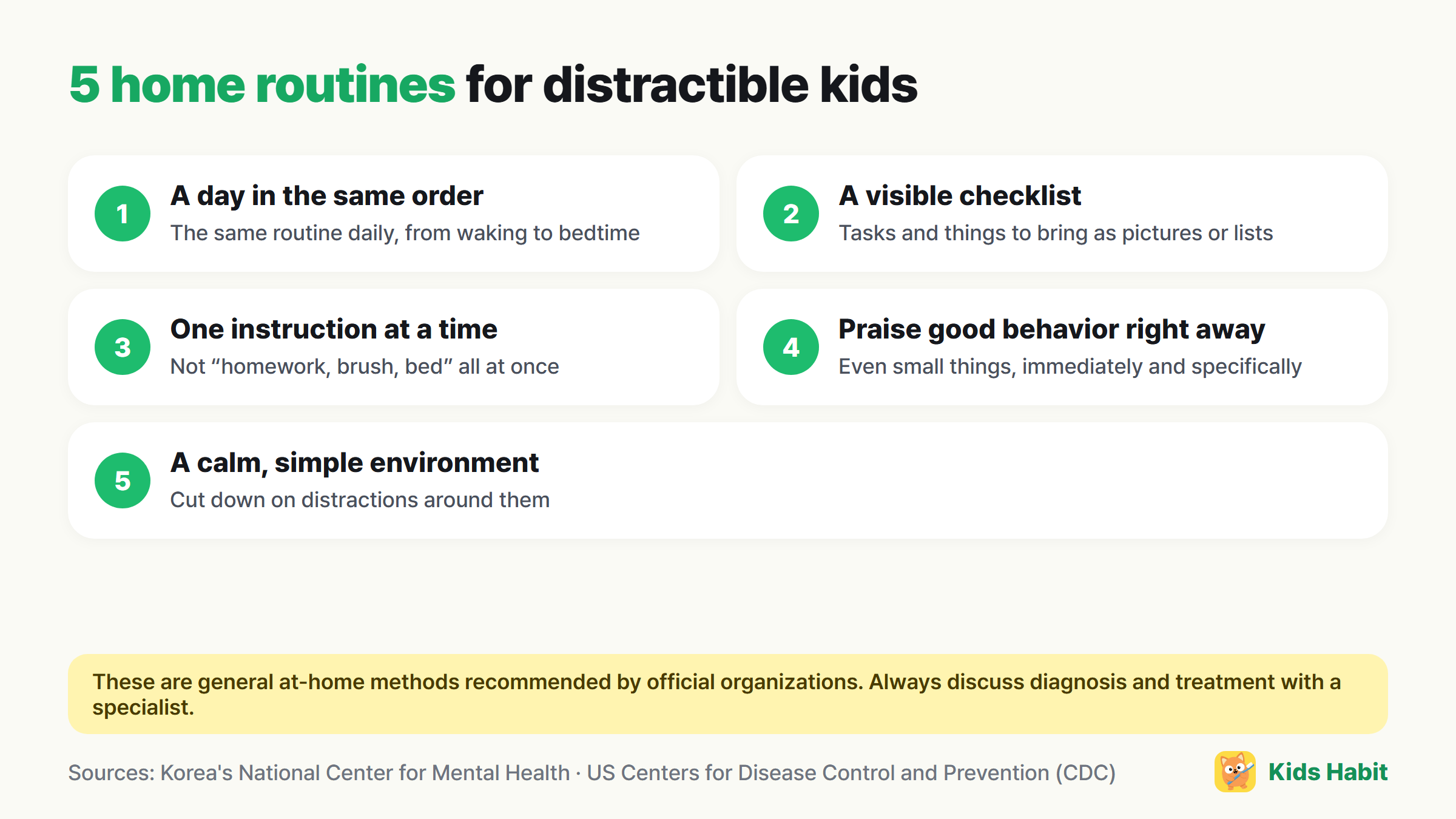
- A day in the same order: The US Centers for Disease Control and Prevention (CDC) advises creating a daily routine that repeats on the same schedule every day, from waking up to bedtime.
- A visible checklist: Korea's National Mental Health Information Portal (National Center for Mental Health) recommends using a daily schedule and checklists so children can remember their tasks and what to bring. The CDC also suggests recording goals and good behavior on a chart and telling your child they did well, and having them keep bags, clothes and toys in the same place every day.
- One instruction at a time: Korea's National Center for Mental Health advises not giving several instructions at once to a child with attention difficulties, but saying them one at a time. If you say “Finish your homework, brush your teeth and go to bed,” they may remember only the last part.
- Praise good behavior right away: The National Center for Mental Health advises praising good behavior, even small things, and using consistent rewards such as praise stickers. The CDC also says to praise right after the desired behavior.
- A calm, simple environment: Korea's National Mental Health Information Portal advises making the surroundings calm and simple to reduce outside distractions.
How can parents keep from burning out?
Korea's National Mental Health Information Portal points out that families raising such children experience a lot of stress, and says it's important for parents to stay consistent and listen carefully to their child. The National Center for Mental Health advises avoiding harsh scolding or arguments and encouraging desirable behavior.
If it's hard to keep the daily schedule and praise in your head every time, you can hand the task list and praise records over to a tool. But no tool can replace consultation and treatment with a specialist.

Frequently asked questions
How can I tell whether my child has ADHD?
Only a child and adolescent psychiatrist can diagnose ADHD. This article does not cover diagnostic information. If you're worried about your child's attention or behavior, talk to a specialist.
Will building routines at home treat it?
No. The methods in this article are general at-home daily management methods recommended by official organizations, and they do not replace diagnosis or treatment. The US Centers for Disease Control and Prevention (CDC) advises discussing behavior therapy with your child's doctor.
Do praise stickers help distractible kids too?
Korea's National Mental Health Information Portal (National Center for Mental Health) advises recognizing good behavior and using consistent rewards such as praise stickers. Discuss the specific approach with a specialist.
References
- Korea National Mental Health Information Portal (National Center for Mental Health) — Attention-Deficit/Hyperactivity Disorder (Korean)
- US Centers for Disease Control and Prevention (CDC) — Behavior Therapy First for Young Children with ADHD
- US Centers for Disease Control and Prevention (CDC) — Parent Training in Behavior Management for ADHD
- Seoul National University Hospital Medical Information — Attention-Deficit/Hyperactivity Disorder (Korean)
- US Centers for Disease Control and Prevention (CDC) — Treatment of ADHD (everyday tips for parents)
This article provides general parenting information based on materials from official organizations and does not replace diagnosis or treatment. If you're concerned about your child's health or development, consult a specialist such as a pediatrician or pediatric dentist.


