Does It Take 21 Days or 66 Days to Form a Habit? What the Research Says
The time it takes for a habit to become automatic was not 21 days but 66 days on average. In a 2010 study by Phillippa Lally's team at University College London (UCL), participants varied widely, from 18 to 254 days, and missing a single day had little effect. The key is repeating the behavior at the same time, after the same cue.
Does a habit really form in 21 days?
“It takes 21 days to form a habit” is a well-known saying, but it's hard to find a study that actually measured it. The best-known study that tracked how long habits take to form is the 2010 study by Phillippa Lally's team at University College London (UCL), published in the European Journal of Social Psychology.
What did the study find?
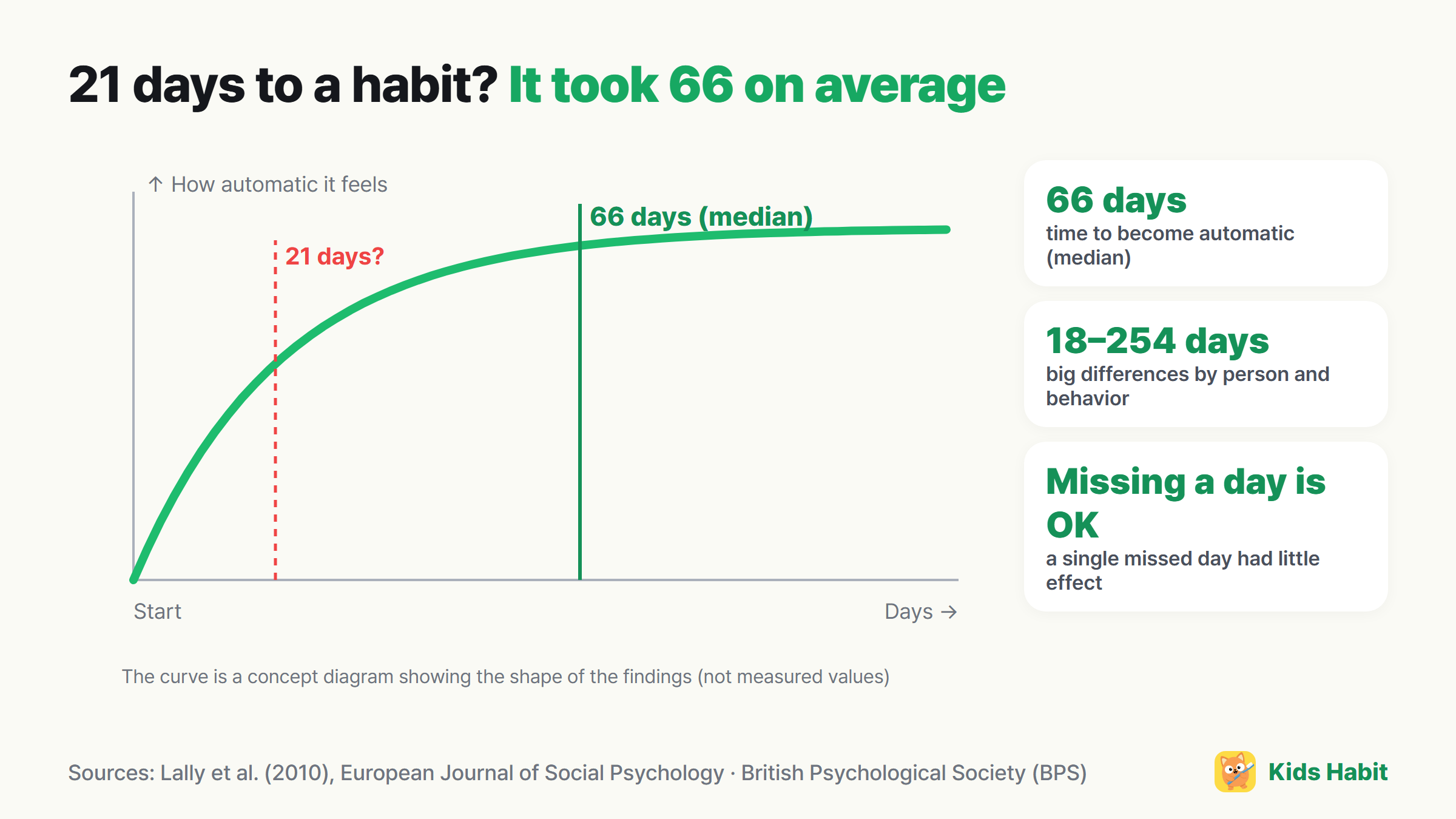
- 66 days on average: The median time for participants to reach the point of doing the new behavior “without thinking” was 66 days.
- Big differences between people: The fastest were predicted to take 18 days, the slowest 254 days.
- Missing a day is okay: According to the British Psychological Society (BPS) summary, missing a single day did not have much effect on later habit formation. Missing often, however, added up and weakened the effect.
- Different speeds for different behaviors: Exercise habits took about 1.5 times longer than eating and drinking habits such as drinking water.
Note that this study involved adult participants. We can't say for certain that it applies to children as is, but “habits take longer than you think, and if you miss a day you can just start again” is a good guide for parents.
How do you apply this to kids' habits?
- Attach it to the same cue: The study viewed “repeating a behavior in response to a consistent cue” as what builds a habit. Attach the new habit after something your child already does, like “after dinner → brush teeth.”
- Wait at least two months: Don't give up after three weeks thinking “It's just not working for my kid.” It takes 66 days on average, and some children may take longer.
- Missed a day? Start again: A single missed day had little effect. Instead of scolding, just do it again the next day.
- Start with easy ones: Complex behaviors like exercise take longer. Starting with short behaviors like brushing or tidying up helps build a sense of success.


Frequently asked questions
Is the 21-day rule for habit formation wrong?
It's hard to find a study that actually measured a 21-day period. In the study by Lally's team at University College London (2010), which actually tracked habit formation, it took 66 days on average and 18 to 254 days depending on the person.
If we skip a day, do we have to start over?
No. According to the Lally study as summarized by the British Psychological Society (BPS), missing a single day did not have much effect on later habit formation. Missing often, however, weakened the effect.
Does it take 66 days for kids too?
The study involved adults, so we can't say for certain it applies to children as is. Still, it's worth keeping in mind that habits don't form in a short time and that people differ a lot.
References
This article provides general parenting information based on materials from official organizations and does not replace diagnosis or treatment. If you're concerned about your child's health or development, consult a specialist such as a pediatrician or pediatric dentist.


