How to Brush a Child's Teeth: How Many Times a Day and for How Long? (By Age)
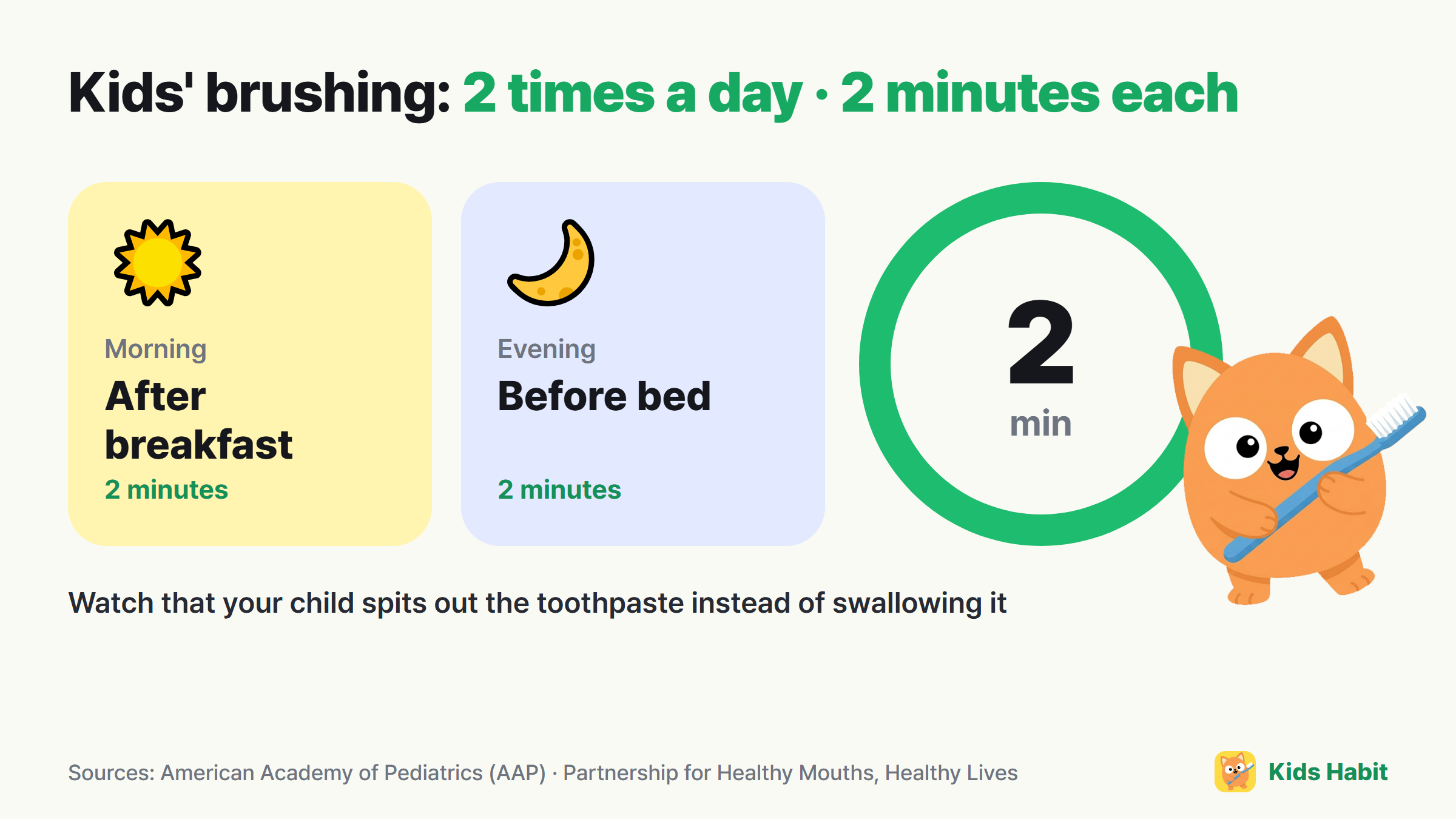
The American Academy of Pediatrics (AAP) recommends brushing twice a day — after breakfast and before bed — for two minutes each time. Use a rice-grain smear of fluoride toothpaste under age 3 and a pea-sized amount from age 3, and help or supervise until your child can brush well alone (usually around age 8–10).
How many times a day, and for how long, should kids brush?
The American Academy of Pediatrics (AAP) says children should brush at least twice a day, ideally right after breakfast and before bed. The Partnership for Healthy Mouths, Healthy Lives, a US coalition of dental and health organizations, sums this up as the easy rule “2 minutes, 2 times a day (2min2x).”
How do toothpaste amount and the parent's role change with age?
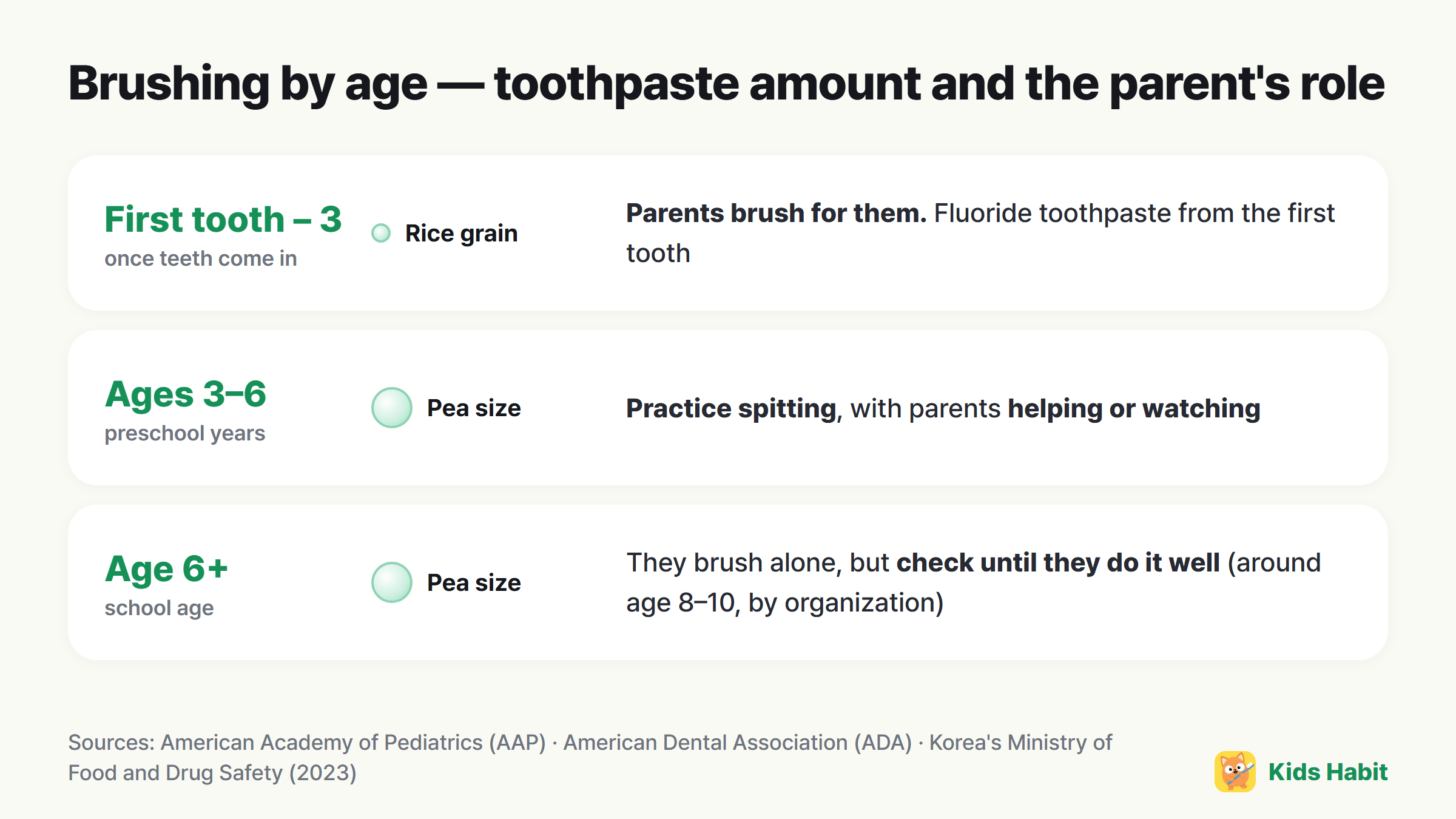
How much toothpaste to use depends on whether your child can spit it out instead of swallowing it. The American Academy of Pediatrics (AAP) and the American Dental Association (ADA) give the same guidance, and Korea's Ministry of Food and Drug Safety (MFDS) recommends a pea-sized amount for children aged 6 and under.
- From the first tooth to age 3: Use only a rice-grain-sized smear of fluoride toothpaste. The AAP recommends starting fluoride toothpaste as soon as the first tooth appears.
- Ages 3–6: Increase to a pea-sized amount. Teach your child to spit the toothpaste out and watch that they don't swallow it (AAP · MFDS).
- After age 6: Let your child brush on their own, but keep checking that every surface gets cleaned.
Until what age should parents help kids brush?
The recommended age differs slightly between organizations. The American Academy of Pediatrics (AAP) says to help or supervise until your child can brush well alone, usually around age 10, while the Partnership for Healthy Mouths, Healthy Lives recommends helping or supervising until age 8.
So rather than age, a more practical guide is whether your child can clean every corner on their own. If they want to brush alone, let them — then check once they're done.
How can you get through two minutes without a struggle?
Two minutes is longer than it sounds for a child. Here is what happens when you apply the principles official organizations give about routines and praise to brushing.
- Same time, same order, every day: The American Academy of Pediatrics (AAP) says that structure and routines in family life make it easier for kids to remember what to do, and gives “brush → book → bed” as an example bedtime routine. Try fixing the order, like “breakfast → brush” and “pajamas → brush.”
- Make two minutes visible: The AAP says visual reminders such as charts and checklists help kids not forget tasks. On the same principle, showing the “end” with an hourglass or timer helps cut down on “When is it over?” arguments.
- Praise right away, and be specific: The US Centers for Disease Control and Prevention (CDC) recommends praising the behavior immediately and naming it — “You brushed carefully for two whole minutes!” rather than “Good job.”

Frequently asked questions
When can my child start using fluoride toothpaste?
The American Academy of Pediatrics (AAP) recommends starting fluoride toothpaste as soon as the first tooth appears. Under age 3, use only a rice-grain-sized amount. Korea's Ministry of Food and Drug Safety notes that toothpaste with 1,000 ppm fluoride or more is effective at preventing cavities.
Should kids rinse with water after brushing?
Guidance differs between organizations. The American Academy of Pediatrics (AAP) says to teach kids from around age 3 to spit out the toothpaste without rinsing with water, while Korea's Ministry of Food and Drug Safety advises rinsing thoroughly after use. What they agree on is not swallowing toothpaste, so decide on rinsing with your child's dentist.
Can I let my child brush alone if they want to?
Let them try on their own, but help or supervise until they can brush well. The AAP points to around age 10, and the Partnership for Healthy Mouths, Healthy Lives to age 8.
References
- American Academy of Pediatrics (AAP) HealthyChildren — Good Oral Health Starts Early
- Partnership for Healthy Mouths, Healthy Lives — 2min2x
- American Dental Association (ADA) MouthHealthy — Healthy Habits for Babies and Kids
- Korea.kr Policy Briefing (Ministry of Food and Drug Safety) — Proper use of toothpaste and mouthwash (2023, Korean)
- US Centers for Disease Control and Prevention (CDC) — Using Rewards
- American Academy of Pediatrics (AAP) HealthyChildren — Age-Appropriate Chores
- American Academy of Pediatrics (AAP) HealthyChildren — Healthy Sleep Habits
This article provides general parenting information based on materials from official organizations and does not replace diagnosis or treatment. If you're concerned about your child's health or development, consult a specialist such as a pediatrician or pediatric dentist.


