Child Has No Sense of Time? 5 Ways to Make the Day Visible
For a child with a weak sense of time, making the day visible helps more than “Hurry up.” The US Centers for Disease Control and Prevention (CDC) recommends the same schedule every day, breaking big tasks into small steps, short and clear instructions, and keeping things in the same place, and the American Academy of Pediatrics (AAP) recommends visual reminders such as charts and checklists.
Why doesn't “Hurry up” work?
Harvard University's Center on the Developing Child explains that the ability to plan, remember and regulate yourself (executive function) is not something children are born with — they are born with the potential, which grows through experience and practice. For a child whose abilities are still developing, “Hurry up” doesn't tell them what to do or by when.
That's why you need ways to show time in front of their eyes, not just in their heads. The methods below summarize the everyday tips the US Centers for Disease Control and Prevention (CDC) gives to parents of children with ADHD, along with guidance from the American Academy of Pediatrics (AAP), and any family that needs more order in daily life can use them.
5 ways to make the day visible
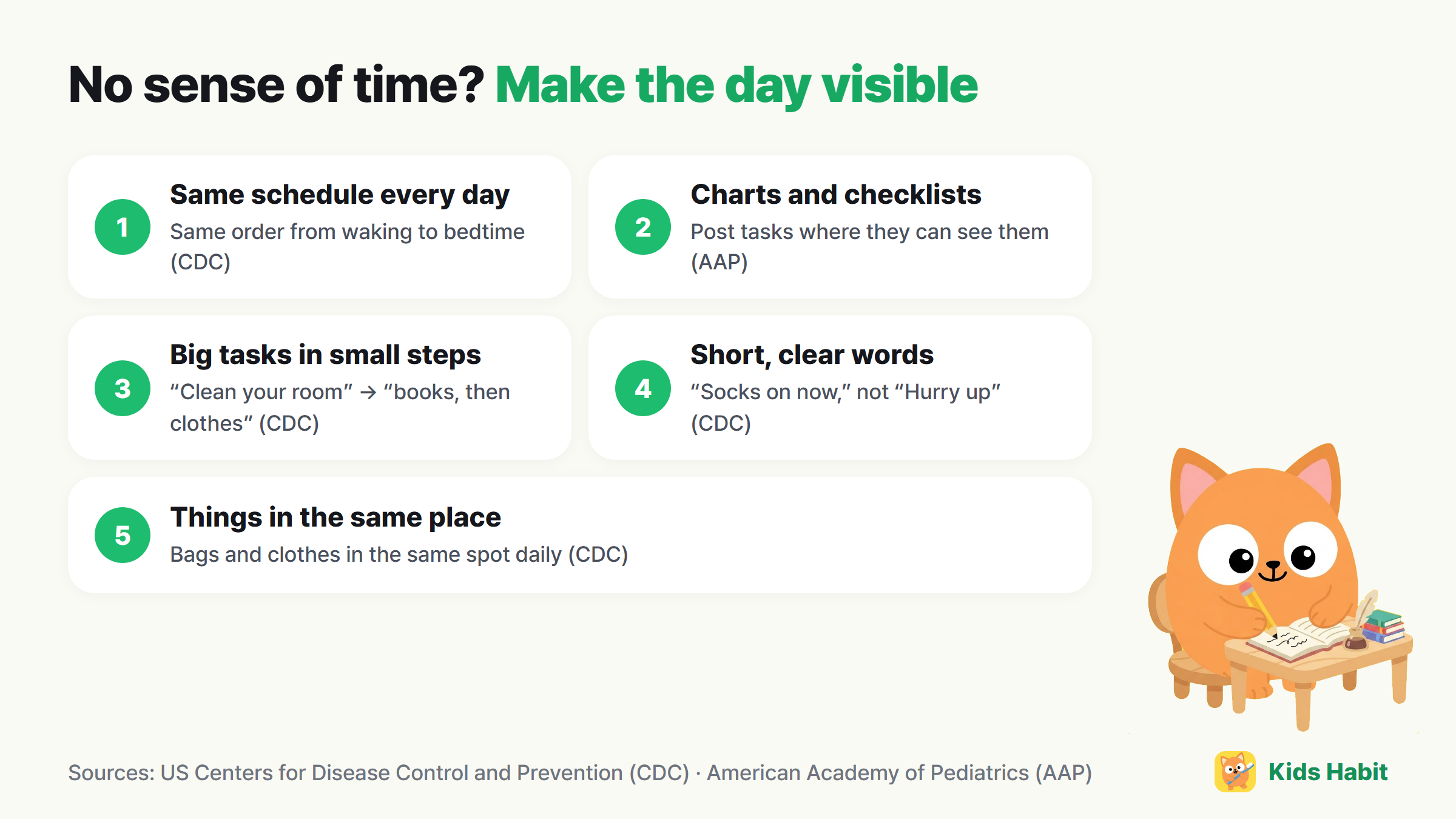
- The same schedule every day: The CDC advises doing daily activities on the same schedule every day, from waking up to bedtime. When the order is the same, your child learns “what comes next” on their own.
- Charts and checklists: The AAP says charts and checklists serve as visual reminders that help kids not forget tasks. The CDC also suggests recording goals and good behavior on a chart and telling your child they did well.
- Big tasks in small steps: The CDC advises breaking complicated tasks into simpler, shorter steps. Instead of “Clean your room,” try “books on the shelf → clothes on the hanger → toys in the box.”
- Short, clear words: The CDC says to give instructions briefly and clearly. Be specific, like “Put on your socks now” instead of “Hurry up.”
- Things in the same place: The CDC says having kids keep bags, clothes and toys in the same place every day means fewer things get lost. Less time is spent hunting for things in the morning.
Showing time as numbers makes it easier
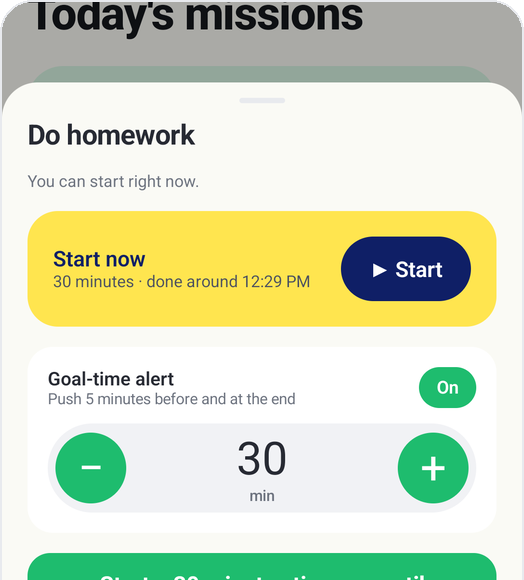
To a child, “30 minutes” is hard to picture. Setting a goal time for fixed tasks like homework and brushing, and watching the remaining time together, can help.

Frequently asked questions
At what age do kids develop a sense of time?
This article isn't information for judging developmental stages. Harvard University's Center on the Developing Child explains that executive function is an ability built through practice. If you're worried about your child's development, talk to a pediatrician.
Won't a timer make my child feel more rushed?
It can differ from child to child. Use the timer not as a tool to rush them but as “a tool that shows when it ends,” and praise specifically as soon as they finish (CDC).
Should a checklist be in words or pictures?
If your child can't read well yet, adding pictures or emoji helps. The American Academy of Pediatrics (AAP) advises using charts and checklists as visual reminders.
References
- US Centers for Disease Control and Prevention (CDC) — Treatment of ADHD (everyday tips for parents)
- American Academy of Pediatrics (AAP) HealthyChildren — Age-Appropriate Chores for Children
- Harvard University Center on the Developing Child — Executive Function Activities Guide
- US Centers for Disease Control and Prevention (CDC) — Using Rewards
This article provides general parenting information based on materials from official organizations and does not replace diagnosis or treatment. If you're concerned about your child's health or development, consult a specialist such as a pediatrician or pediatric dentist.


